








| Suggestions from Campaign for Better Transport for the budget Posted by grahame at 17:03, 7th November 2025 |     |
Shared with me by the chair of the Melksham Environment Group, by email to her from the Campaign for Better Transport
Also at https://bettertransport.org.uk/blog/will-the-budget-tackle-transport-poverty/
A Budget for public transport
Hello Shirley
After 14 years of fuel duty freezes and a five-year fuel duty cut, transport costs are still keeping five million people below the poverty line. Doggedly clinging to the cut in fuel duty - which has primary benefitted richer households and fuel retailers - whilst simultaneously prioritising road investment will not change this. That's why we have written to the Chancellor to urge her to use the forthcoming Budget to rebalance transport taxation and prioritise public transport to help hard-pressed households and provide the sustainable economic growth we need.
Ending the fuel duty cut
With the cost of petrol and diesel now much lower than when the "temporary" 5p fuel duty cut was introduced five years ago, allowing the cut to expire would recoup £2.6 billion a year in lost revenue. Reinstating the annual inflation-linked fuel duty rise would raise a further £1.6 billion in the first year alone. The impact on fuel bills for individuals would not be large, and the additional income could be invested in infrastructure improvements and public services to the benefit of millions of households.
Introducing a per-mile charge for electric vehicles
As more people switch to electric vehicles, revenue from fuel duty will plummet. The Chancellor should set out a process and timetable for introducing a simple, per-mile charge for EVs. This would be fair, and avoid a looming budget black hole. The charge should be low, so that it's still cheaper to drive a cleaner car.
Closing the aviation loophole
The Chancellor could also choose to close the loophole that provides airlines with tax-free fuel by introducing a kerosene tax at 33p a litre. Even after excluding 'lifeline flights' (those from remote islands in the UK to the mainland), this new tax would still raise £594 million per annum for the exchequer. Introducing a new ‘super’ rate of Air Passenger Duty – set at ten times the current higher rate – for all private jet passengers and charging VAT on all private jet flights would raise a further £1.5 billion to £2 billion a year.
Prioritising public transport
Public transport investment brings a much higher return than investment in roads. Boosting investment in local bus services and fare concessions would help tackle transport poverty and improve people's life chances. Cancelling the 2026 rail fare increase and speeding up fares and ticketing reforms would make trains more affordable and encourage more people to use them. We also want to see the Government commit to key rail infrastructure improvements.
With every Budget there are hard decisions to be made. The politics of increasing fuel duty are not easy, but nor are any of the other fiscal choices available to the Government. Transport investment is essential to economic growth, but not all transport investment is equal. Prioritising public transport investment will ensure we get sustainable economic growth which doesn't cost the earth.
Goodbye till next time
Silviya Barrett, Director of Policy & Campaigns
Campaign for Better Transport
Hello Shirley
After 14 years of fuel duty freezes and a five-year fuel duty cut, transport costs are still keeping five million people below the poverty line. Doggedly clinging to the cut in fuel duty - which has primary benefitted richer households and fuel retailers - whilst simultaneously prioritising road investment will not change this. That's why we have written to the Chancellor to urge her to use the forthcoming Budget to rebalance transport taxation and prioritise public transport to help hard-pressed households and provide the sustainable economic growth we need.
Ending the fuel duty cut
With the cost of petrol and diesel now much lower than when the "temporary" 5p fuel duty cut was introduced five years ago, allowing the cut to expire would recoup £2.6 billion a year in lost revenue. Reinstating the annual inflation-linked fuel duty rise would raise a further £1.6 billion in the first year alone. The impact on fuel bills for individuals would not be large, and the additional income could be invested in infrastructure improvements and public services to the benefit of millions of households.
Introducing a per-mile charge for electric vehicles
As more people switch to electric vehicles, revenue from fuel duty will plummet. The Chancellor should set out a process and timetable for introducing a simple, per-mile charge for EVs. This would be fair, and avoid a looming budget black hole. The charge should be low, so that it's still cheaper to drive a cleaner car.
Closing the aviation loophole
The Chancellor could also choose to close the loophole that provides airlines with tax-free fuel by introducing a kerosene tax at 33p a litre. Even after excluding 'lifeline flights' (those from remote islands in the UK to the mainland), this new tax would still raise £594 million per annum for the exchequer. Introducing a new ‘super’ rate of Air Passenger Duty – set at ten times the current higher rate – for all private jet passengers and charging VAT on all private jet flights would raise a further £1.5 billion to £2 billion a year.
Prioritising public transport
Public transport investment brings a much higher return than investment in roads. Boosting investment in local bus services and fare concessions would help tackle transport poverty and improve people's life chances. Cancelling the 2026 rail fare increase and speeding up fares and ticketing reforms would make trains more affordable and encourage more people to use them. We also want to see the Government commit to key rail infrastructure improvements.
With every Budget there are hard decisions to be made. The politics of increasing fuel duty are not easy, but nor are any of the other fiscal choices available to the Government. Transport investment is essential to economic growth, but not all transport investment is equal. Prioritising public transport investment will ensure we get sustainable economic growth which doesn't cost the earth.
Goodbye till next time
Silviya Barrett, Director of Policy & Campaigns
Campaign for Better Transport
| Re: Suggestions from Campaign for Better Transport for the budget Posted by Chris from Nailsea at 23:17, 7th November 2025 | |
It's encouraging to see that they have sent that to Rachel from Accounts.
(Thanks, TaplowGreen: I personally found that nomenclature very funny.
 )
)| Re: Suggestions from Campaign for Better Transport for the budget Posted by ChrisB at 11:46, 9th November 2025 | |
Slightly misogynistic?
| Re: Suggestions from Campaign for Better Transport for the budget Posted by Chris from Nailsea at 12:24, 9th November 2025 | |
Not from me.

I think Rachel Reeves is in an unenviable position, with the press and pressure groups writing her Budget speech for her, before she has a chance to reply.
| Re: Suggestions from Campaign for Better Transport for the budget Posted by ChrisB at 12:37, 9th November 2025 | |
I meant that you wouldn't have called a male Chancellor of the Exchequer 'Bob from accounts'.....
| Re: Suggestions from Campaign for Better Transport for the budget Posted by Chris from Nailsea at 13:35, 9th November 2025 | |
| Re: Suggestions from Campaign for Better Transport for the budget Posted by Witham Bobby at 09:42, 10th November 2025 | |
The very notion that you can tax a nation into prosperity is laughable
Except it's not funny. We have had years of governments that think exactly this
| Re: Suggestions from Campaign for Better Transport for the budget Posted by Chris from Nailsea at 04:42, 29th November 2025 | |
Rachel from Accounts is having a bad day in the office: from the BBC, see 'Reeves on brink' and 'Chancer of the Exchequer'

| Re: Suggestions from Campaign for Better Transport for the budget Posted by ellendune at 09:38, 29th November 2025 | |
The very notion that you can tax a nation into prosperity is laughable
Except it's not funny. We have had years of governments that think exactly this
Except it's not funny. We have had years of governments that think exactly this
The notion that you can tax a nation into prosperity is an oversimplification. It has a corollary that you can cut taxes (and in practice also spending) to make a nation prosperous. Both are wrong as it is more nuanced.
Keynesian economics, which promotes public spending to boost the economy, is proven to work (Roosevelt's New Deal is a classic example). This relies on most of the money going into the pockets of ordinary people who spend most of it rather than keep it in the bank. It then gets recycled to other ordinary people. But if you go too far there is more demand than supply and you get inflation as we did in the 1970's.
If you take the corollary and cut taxes for the rich it generally goes into savings and doesn't get recycled. The theory of trickle down has been shown not to happen for the reasons stated above. The argument against this is that the wealthy will invest it in industry and that is good, except most people who save don't invest in shares and so it does not have that effect. Banks have not been too good at investing in business either which is why keeping the money in the bank doesn't work.
Where I would have issue with Rachel from accounts is keeping tax allowances stable. This means the amount of taxes paid by the ordinary person, who would otherwise spend it, will increase. In that sense you indeed cannot tax a nation into prosperity. But taxing those with so much money they don't recycle it into the economy can indeed make a contribution to making a nation prosperous if government uses that money well.
On the expenditure side there are the arguments about big and small government. If you cut both taxes and public services, but instead people have to pay for those services privately, they are no better of and many, especially the poor, will be worse off.
It is said that our productivity is low. This is partly a skilled labour shortage and partly an investment issue.
In my own industry (the water industry) we have an acute shortage of skilled professional engineers, at a time when investment is massively increasing to clean up our environment. I would suggest that student fees have not helped this, as civil engineering is generally a 4 year course. As a result most of the major engineering consultancies have offshored a lot of the detailed design abroad. This is money out of the economy. In the next year as more projects move into the build stage it will be a shortage of skilled labour to build these projects.
The number of working aged people who are not able to work due to illness is too high. Yet we have a vicious circle because those left in work are worked so hard that by the time they get near to retiring age they are burned out! A properly funded health service would go a long way to help with this. For this of course we need more skilled doctors and nurses etc. But these people are some of the most overworked! Raising the retirement age is unpopular, I am blessed that despite my infirmities the nature of my work means I am still able to work part time beyond retirement age and enjoy it. If my job involved manual labour I would not be able to do that. If I was still working in the demanding job I had when it was full time I would have fully retired by now.
Industry also wants good transport links and a decent power grid. People and industry need water whether it is private or public investment in these utilities it still needs paying for (either taxes or increased charges) and governments have through regulators stifled this investment over the last 20 years through demands to keep down bills.
Which brings us back to transport. East West Rail is justified in government by allowing movement of labour from areas around Oxford and Cambridge where the housing market is highly priced and where water resources are limited (especially in Cambridge) to commute from places like Milton Keynes and Bedford. A better rail network is therefore positive for the economy.
| Re: Suggestions from Campaign for Better Transport for the budget Posted by TaplowGreen at 10:10, 29th November 2025 | |
The very notion that you can tax a nation into prosperity is laughable
Except it's not funny. We have had years of governments that think exactly this
Except it's not funny. We have had years of governments that think exactly this
The notion that you can tax a nation into prosperity is an oversimplification. It has a corollary that you can cut taxes (and in practice also spending) to make a nation prosperous. Both are wrong as it is more nuanced.
Keynesian economics, which promotes public spending to boost the economy, is proven to work (Roosevelt's New Deal is a classic example). This relies on most of the money going into the pockets of ordinary people who spend most of it rather than keep it in the bank. It then gets recycled to other ordinary people. But if you go too far there is more demand than supply and you get inflation as we did in the 1970's.
If you take the corollary and cut taxes for the rich it generally goes into savings and doesn't get recycled. The theory of trickle down has been shown not to happen for the reasons stated above. The argument against this is that the wealthy will invest it in industry and that is good, except most people who save don't invest in shares and so it does not have that effect. Banks have not been too good at investing in business either which is why keeping the money in the bank doesn't work.
Where I would have issue with Rachel from accounts is keeping tax allowances stable. This means the amount of taxes paid by the ordinary person, who would otherwise spend it, will increase. In that sense you indeed cannot tax a nation into prosperity. But taxing those with so much money they don't recycle it into the economy can indeed make a contribution to making a nation prosperous if government uses that money well.
On the expenditure side there are the arguments about big and small government. If you cut both taxes and public services, but instead people have to pay for those services privately, they are no better of and many, especially the poor, will be worse off.
It is said that our productivity is low. This is partly a skilled labour shortage and partly an investment issue.
In my own industry (the water industry) we have an acute shortage of skilled professional engineers, at a time when investment is massively increasing to clean up our environment. I would suggest that student fees have not helped this, as civil engineering is generally a 4 year course. As a result most of the major engineering consultancies have offshored a lot of the detailed design abroad. This is money out of the economy. In the next year as more projects move into the build stage it will be a shortage of skilled labour to build these projects.
The number of working aged people who are not able to work due to illness is too high. Yet we have a vicious circle because those left in work are worked so hard that by the time they get near to retiring age they are burned out! A properly funded health service would go a long way to help with this. For this of course we need more skilled doctors and nurses etc. But these people are some of the most overworked! Raising the retirement age is unpopular, I am blessed that despite my infirmities the nature of my work means I am still able to work part time beyond retirement age and enjoy it. If my job involved manual labour I would not be able to do that. If I was still working in the demanding job I had when it was full time I would have fully retired by now.
Industry also wants good transport links and a decent power grid. People and industry need water whether it is private or public investment in these utilities it still needs paying for (either taxes or increased charges) and governments have through regulators stifled this investment over the last 20 years through demands to keep down bills.
Which brings us back to transport. East West Rail is justified in government by allowing movement of labour from areas around Oxford and Cambridge where the housing market is highly priced and where water resources are limited (especially in Cambridge) to commute from places like Milton Keynes and Bedford. A better rail network is therefore positive for the economy.
Irrespective of Keynes, or their motivations, Labour demonstrably lied in their manifesto, and equally irrespective of "YeahbuttheTories", I think we were all led to believe by Starmer that we could expect better than that.
| Re: Suggestions from Campaign for Better Transport for the budget Posted by GBM at 12:07, 29th November 2025 | |
We are told by every new Prime Minister/Chancellor/Government recently that things will be tough, but we must 'suck it up', pay more and work harder and longer for a few years. We should then start to see improvements.
Before we see any improvement, there's a change of Government/Prime Minister/Chancellor with a different outlook.
More taxes, etc.
Doesn't seem to matter who is in charge these days.
And don't get me started on the youngsters who are so aware of mental health issues these days, many go sick on leaving College, thus increasing our benefits bill.
This is no way takes away the issues for those with real health problems.
| Re: Suggestions from Campaign for Better Transport for the budget Posted by Chris from Nailsea at 17:52, 1st December 2025 | |
The chair of the Office for Budget Responsibility (OBR) has had 'a bad day in the office':
From the BBC:
OBR head resigns over Budget leak
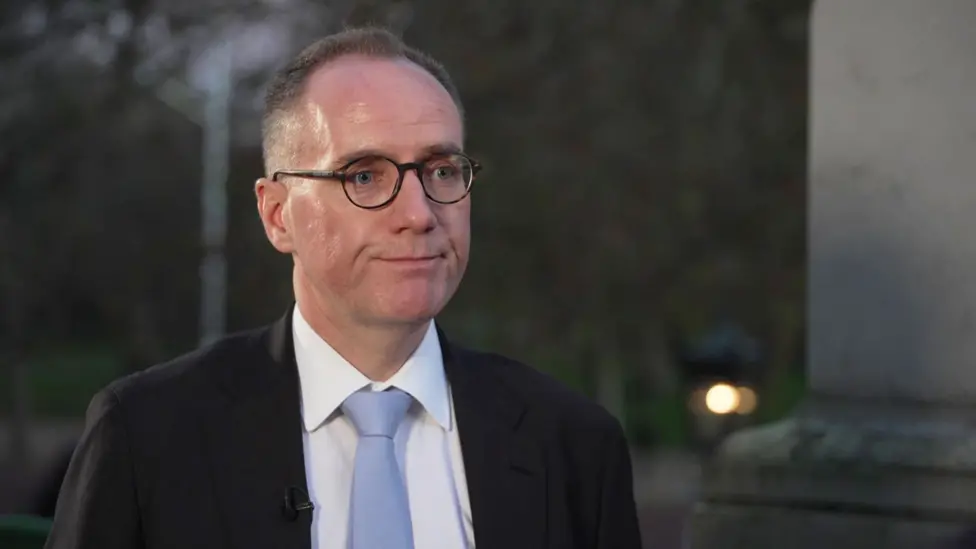
Chair of the OBR Richard Hughes said he took "full responsibility" for the shortcomings identified in the report
The chairman of the Office for Budget Responsibility (OBR) has resigned following the Budget day error which saw a key document published early.
Richard Hughes said in his resignation letter he took "full responsibility" for the issues that were identified in the OBR's investigation into the error.
That investigation found the early publication of the OBR's forecasts was the worst failure in the organisation's 15-year history.
The UK's official forecaster confirmed the market-sensitive report was accessed 43 times from 32 different devices in the hour before the chancellor's speech.
In a letter sent to both the chancellor and the chair of the Treasury Select Committee, Dame Meg Hillier, Mr Hughes said he believed the OBR could "quickly regain and restore the confidence and esteem" it had earned by implementing the report's recommendations.
"But I also need to play my part in enabling the organisation that I have loved leading for the past five years to quickly move on from this regrettable incident," he continued. "I have, therefore, decided it is in the best interest of the OBR for me to resign as its Chair and take full responsibility to the shortcomings identified in the report."
Mr Hughes had been due to face questions from the Treasury Select Committee on Tuesday about the Budget and the OBR's economic forecasts, but Dame Meg confirmed that he would no longer attend.
In response to his resignation, Chancellor Rachel Reeves said: "I want to thank Richard Hughes for his public service and for leading the Office for Budget Responsibility over the past five years and for his many years of public service."
But Conservative Party leader Kemi Badenoch accused the chancellor of "trying to use the chair of the OBR as her human shield".
Paul Johnson, the former director of the Institute for Fiscal Studies and provost at Queen's College, Oxford said he was not surprised Mr Hughes had resigned. "That was a really bad mistake," he told BBC News, but added that Mr Hughes had been a "very effective and very robust" head of the OBR. "I think it's a shame for Richard Hughes and a shame for the OBR."
Mr Hughes had only recently started his second five-year term as OBR chairman, after being renominated by the chancellor in May. He first took up the job during the Covid pandemic in October 2020. Prior to that, he had been director of fiscal policy at the Treasury, and earlier he was the division chief of the International Monetary Fund's fiscal affairs department for eight years.
Following the Budget day leak, Mr Hughes called in a leading cyber-security expert to investigate how the crucial document was put on its website too early.
On Monday the report into the mishap concluded it had "inflicted heavy damage on the OBR's reputation", but added that it was inadvertent. The "ultimate responsibility" for the circumstances which meant people could access the report early lay with the OBR's leadership, the report added.
"It is the worst failure in the 15-year history of the OBR," the report said. "It was seriously disruptive to the chancellor, who had every right to expect that the EFO (economic and fiscal outlook) would not be publicly available until she sat down at the end of her Budget speech, when it should, as is usual, have been published alongside the Treasury's explanatory Red Book."
Monday's report also found that somebody gained early access to the equivalent financial forecasts in March while Reeves was delivering her Spring Statement, though they did not act on the information.
The Chancellor's Budget was thrown into chaos when the OBR's forecast was discovered online.
The OBR assesses the health of the UK's economy. It is independent of the government but works closely with the Treasury. Its reports are released alongside big government events such as the Budget, details of which are supposed to be kept under wraps until the chancellor announces them in the House of Commons.
The OBR's early publication effectively confirmed a number of new measures, including a pay-per-mile charge on electric vehicles, and a three-year freeze on income tax and National Insurance thresholds, before the chancellor announced them. The OBR quickly removed the forecast document from its website and apologised for the release, which it blamed on a "technical error".
The OBR brought in Ciaran Martin, the former chief executive of the National Cyber Security Centre, to lead the investigation into how the forecasts were accessed early. However, the OBR concluded there was no reason to suspect the involvement of foreign actors or cyber-criminals, or of "connivance by anyone working for the OBR".
Prof Martin's technical account was that the OBR analysis was available at a hidden url for 38 minutes between 11:30 and 12:08 on the morning of the Budget.
An attempt was made to access the URL as early as 05:16. The review did not seek to trace who accessed or attempted to access the document.
Prof Martin concluded this was a pre-existing weakness in the OBR publication system because of the premature access to March's forecasts. Prof Martin said that breach, half an hour before when it should have been published, could have been accidental, but it led him to conclude the issue was not new. On the reason for the early publication, Prof Martin said it was related to the software the OBR chose to publish to its website, which was more suitable for a small or medium company than a major publication of critical market-sensitive data.
While OBR staff thought they had applied safeguards to prevent early publication, there were two errors in the way in which they were set up on the publishing platform WordPress that effectively bypassed these controls. WordPress is a content management system, and is said to be the most popular tool of its kind for creating and designing web pages.
One error was to do with a plug-in (an optional extra) the OBR had installed in WordPress, which had the unintended effect of bypassing the need to log in to access documents intended for future publication. And the second was the directory in which the file was put ahead of publication allowed anyone to download a file directly.
The OBR got an exemption in 2013 from using a more secure government publishing platform for independent authorities in order to help with its autonomy. In other IT security areas, such as secure email, the OBR had adopted the secure Treasury systems.
A Treasury spokesperson thanked the OBR for its report and said a minister would respond "in due course".
Chair of the OBR Richard Hughes said he took "full responsibility" for the shortcomings identified in the report
The chairman of the Office for Budget Responsibility (OBR) has resigned following the Budget day error which saw a key document published early.
Richard Hughes said in his resignation letter he took "full responsibility" for the issues that were identified in the OBR's investigation into the error.
That investigation found the early publication of the OBR's forecasts was the worst failure in the organisation's 15-year history.
The UK's official forecaster confirmed the market-sensitive report was accessed 43 times from 32 different devices in the hour before the chancellor's speech.
In a letter sent to both the chancellor and the chair of the Treasury Select Committee, Dame Meg Hillier, Mr Hughes said he believed the OBR could "quickly regain and restore the confidence and esteem" it had earned by implementing the report's recommendations.
"But I also need to play my part in enabling the organisation that I have loved leading for the past five years to quickly move on from this regrettable incident," he continued. "I have, therefore, decided it is in the best interest of the OBR for me to resign as its Chair and take full responsibility to the shortcomings identified in the report."
Mr Hughes had been due to face questions from the Treasury Select Committee on Tuesday about the Budget and the OBR's economic forecasts, but Dame Meg confirmed that he would no longer attend.
In response to his resignation, Chancellor Rachel Reeves said: "I want to thank Richard Hughes for his public service and for leading the Office for Budget Responsibility over the past five years and for his many years of public service."
But Conservative Party leader Kemi Badenoch accused the chancellor of "trying to use the chair of the OBR as her human shield".
Paul Johnson, the former director of the Institute for Fiscal Studies and provost at Queen's College, Oxford said he was not surprised Mr Hughes had resigned. "That was a really bad mistake," he told BBC News, but added that Mr Hughes had been a "very effective and very robust" head of the OBR. "I think it's a shame for Richard Hughes and a shame for the OBR."
Mr Hughes had only recently started his second five-year term as OBR chairman, after being renominated by the chancellor in May. He first took up the job during the Covid pandemic in October 2020. Prior to that, he had been director of fiscal policy at the Treasury, and earlier he was the division chief of the International Monetary Fund's fiscal affairs department for eight years.
Following the Budget day leak, Mr Hughes called in a leading cyber-security expert to investigate how the crucial document was put on its website too early.
On Monday the report into the mishap concluded it had "inflicted heavy damage on the OBR's reputation", but added that it was inadvertent. The "ultimate responsibility" for the circumstances which meant people could access the report early lay with the OBR's leadership, the report added.
"It is the worst failure in the 15-year history of the OBR," the report said. "It was seriously disruptive to the chancellor, who had every right to expect that the EFO (economic and fiscal outlook) would not be publicly available until she sat down at the end of her Budget speech, when it should, as is usual, have been published alongside the Treasury's explanatory Red Book."
Monday's report also found that somebody gained early access to the equivalent financial forecasts in March while Reeves was delivering her Spring Statement, though they did not act on the information.
The Chancellor's Budget was thrown into chaos when the OBR's forecast was discovered online.
The OBR assesses the health of the UK's economy. It is independent of the government but works closely with the Treasury. Its reports are released alongside big government events such as the Budget, details of which are supposed to be kept under wraps until the chancellor announces them in the House of Commons.
The OBR's early publication effectively confirmed a number of new measures, including a pay-per-mile charge on electric vehicles, and a three-year freeze on income tax and National Insurance thresholds, before the chancellor announced them. The OBR quickly removed the forecast document from its website and apologised for the release, which it blamed on a "technical error".
The OBR brought in Ciaran Martin, the former chief executive of the National Cyber Security Centre, to lead the investigation into how the forecasts were accessed early. However, the OBR concluded there was no reason to suspect the involvement of foreign actors or cyber-criminals, or of "connivance by anyone working for the OBR".
Prof Martin's technical account was that the OBR analysis was available at a hidden url for 38 minutes between 11:30 and 12:08 on the morning of the Budget.
An attempt was made to access the URL as early as 05:16. The review did not seek to trace who accessed or attempted to access the document.
Prof Martin concluded this was a pre-existing weakness in the OBR publication system because of the premature access to March's forecasts. Prof Martin said that breach, half an hour before when it should have been published, could have been accidental, but it led him to conclude the issue was not new. On the reason for the early publication, Prof Martin said it was related to the software the OBR chose to publish to its website, which was more suitable for a small or medium company than a major publication of critical market-sensitive data.
While OBR staff thought they had applied safeguards to prevent early publication, there were two errors in the way in which they were set up on the publishing platform WordPress that effectively bypassed these controls. WordPress is a content management system, and is said to be the most popular tool of its kind for creating and designing web pages.
One error was to do with a plug-in (an optional extra) the OBR had installed in WordPress, which had the unintended effect of bypassing the need to log in to access documents intended for future publication. And the second was the directory in which the file was put ahead of publication allowed anyone to download a file directly.
The OBR got an exemption in 2013 from using a more secure government publishing platform for independent authorities in order to help with its autonomy. In other IT security areas, such as secure email, the OBR had adopted the secure Treasury systems.
A Treasury spokesperson thanked the OBR for its report and said a minister would respond "in due course".
